 By Ozzy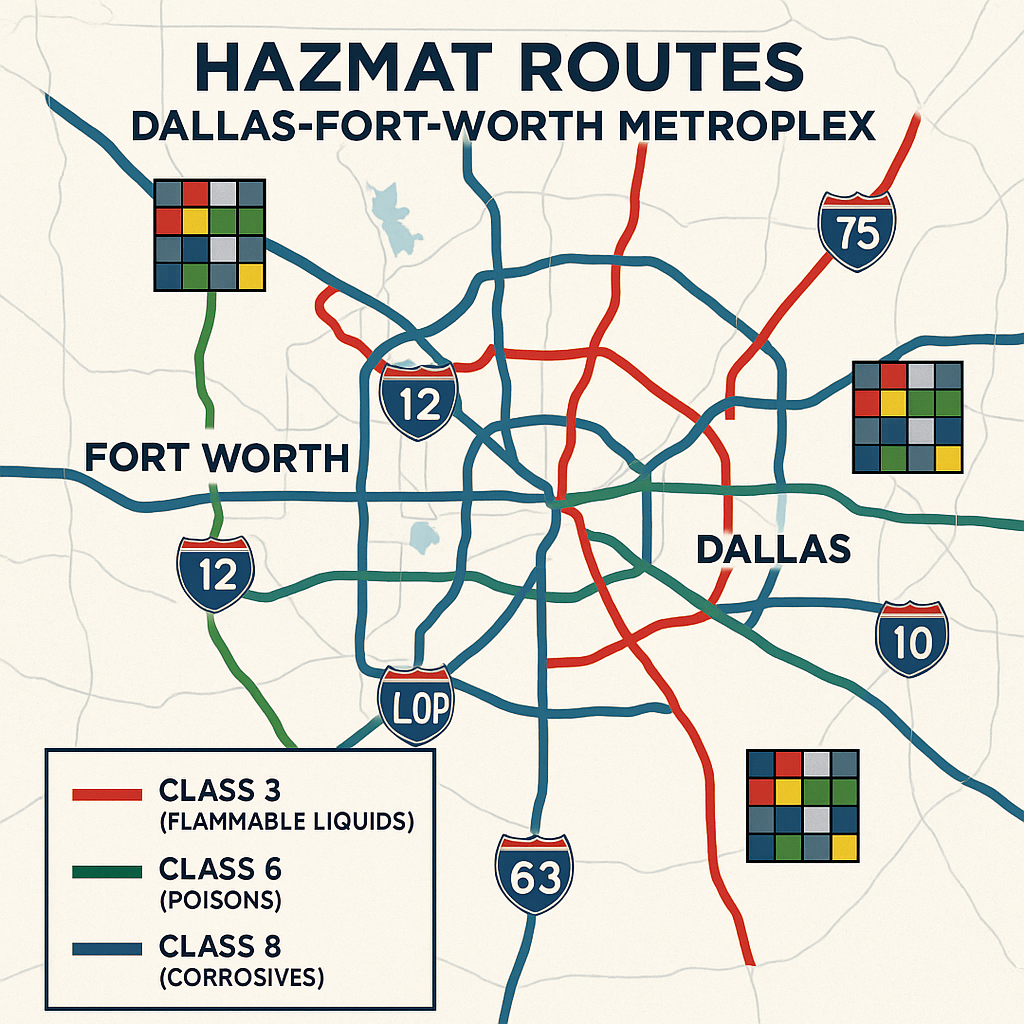
Efficient hazmat route planning Dallas methods necessitate the mixture of knowledge of regulations, advanced technology, and explicit operational manuals. From navigating diverse state regulations to ensuring real‑time visibility, shippers and carriers come across a host of unique challenges delivering hazardous goods across the Dallas–Fort Worth metroplex. The paper mainly discusses the usage of modern delivery optimization tools with the help of robust DFW tracking integration for the logistics sector to enhance safety, cut costs, and push customer satisfaction.
Knowledge of Regulatory Environment and Risk Assessment
Real-World Insight: DFW’s Outdated Hazmat Routes
Dallas–Fort Worth’s official hazmat truck routes haven’t been updated since 1985, despite massive population growth and urban sprawl.
This short CBS News video reveals how outdated infrastructure and regulatory inertia can complicate risk assessment — highlighting why modern tracking tools and route simulations are crucial for hazmat safety today.
The first step is to have a clear overview of the local rules and regulations before creating a hazmat route as companies should carry out a comprehensive risk assessment to pinpoint possible hazards within each section of the route. Major activities consist of:
- State Regulations Review: The Texas Department of Transportation offers hazmat linking corridors and requests for oversize or overweight loads.
- Local Restrictions Analysis: Municipal by‑laws in Dallas and Fort Worth may limit certain materials during traffic jam hours.
- Compatibility Charts Consultation: These maps juxtapose particular hazardous classes (e.g., flammable, corrosive, toxic) against approved roads, tunnels, and bridges.
| Hazmat Class | DFW Approved Routes | Special Permit Required |
| Class 3 (Flammable Liquids) | I‑20, I‑35E, US‑75 | Yes |
| Class 6 (Poisons) | Loop 12, TX‑114 | No |
| Class 8 (Corrosives) | I‑635 Outer Loop, I‑30 | Yes |
Such compatibility charts show that the routes chosen for the transport will not go through the prohibited areas, thus no fines or delays will occur.
Employing Geo‑Zone Planning and Waypoint Selection

Geo‑zone planning organizes the entire DFW area into small palpable sectors such as industrial parks, urban centers, and port access points, which helps dispatchers to assign routes that:
- Avoid Traffic Jam: By steering clear of the well‑known traffic jams during the rush hour.
- Respect Load Restrictions: Making sure that the vehicle only drives into the zones where their cargo is allowed.
- Optimize Service Levels: Customizing the time of pickup and delivery.
Same with geo‑zones, waypoint selection ensures safety, for instance, identifying a safe area for pullouts where inspections or emergency stops are performed. The waypoints management supporting tools allow:
- Custom waypoints for fuel, rest, and hazmat‑authorized weigh stations.
- Automatic rerouting if a waypoint becomes unavailable.
- Integration of local facility coordinates directly into the route.
Tracking Alignment and Dispatch Sync

The real visibility factor in DFW tracking integration is that the connection is made telematics on‑board and the dispatch systems run centrally so the result is that transporters get:
- Live GPS Monitoring: Each truck and trailer is tracked accurately through the GPS system.
- Dispatch Sync: Instantaneous updates for drivers and planners with respect to the schedule changes or incidents.
- Exception Handling: Automated warnings for route deviations, safety restrictions, or unscheduled halts.
For example, HMD Trucking uses a cloud‑based dashboard that instantly pushes route changes to drivers’ mobile terminals, ensuring that any exception handling — from bridge closures to sudden weather events — is addressed within minutes. If you’re interested in joining their trucking team in Cincinnati, click here to apply.
Route Simulation with TMS Integration
Among the activities that logistics teams can conduct before sending a hazmat shipment is the running of simulated route simulation exercises in their Transport Management Systems (TMS). The positive sides include:
- What‑If Analysis: Testing paths different with traffic, weather, or permit change scenarios.
- TMS Integration: Where orders meet compliance documents and tracking all in one platform.
- Dispatch Sync: Replaying the simulated routing with the dispatchers, to refine instruction and spot the potential pain point.
The use of simulation modules in the TMS, the planners save hours of work for manual research and decrease costs for last‑minute deviations. Modern TMS designs generate permits and auditors automatically.
Analyzing Delivery Optimization Tools
Not all platforms are the same. The choice of delivery optimization tools should take into account these basic functions:
| Feature | Benefit | Must‑Have for Hazmat |
| Dynamic Risk Modeling | Adapts routes based on live incident data | ✔︎ |
| Compatibility Chart Library | Automatically checks material restrictions | ✔︎ |
| Geo‑Zone Mapping | Visual zone overlays for planning | ✔︎ |
| Real‑Time ETA Accuracy | Tightens delivery windows to minutes | ✔︎ |
| Cost Analysis Reports | Highlights fuel, toll, and labor costs | – |
| Exception Handling | Triggers multi‑channel alerts | ✔︎ |
The table above shows how these features aid safer and more lucrative hazmat operations.
Merging Cost Analysis and ETA Accuracy
While safety and compliance are top priority, the carriers should also be careful about their expenses. The tools used for cost analysis in route planning help break down costs through:
- Fuel consumption related to road quality and vehicle type.
- Toll and permit expenses associated with each path.
- Labor fees entailed in driver’s hours and delivery time.
By juxtaposing these two cost factors with ETA accuracy, the planners have the option of picking routes that are a bit longer as long as the service level agreement allows it. In contrast, for the deliveries that are time sensitive, the systematic ETA tools mitigate the chance of window misses.
Best Practices for Implementation
A successful tracking of hazardous materials solutions relies on:
- Extensive Training: Everyone who is a dispatcher or driver has to know system alerts and controls.
- Data Quality Assurance: A schedule for regular updates to geo‑zone maps, compatibility charts, and TMS records.
- Iterative Testing: Use route simulation in low‑risk scenarios to build confidence before full rollout.
- Stakeholder Collaboration: Work with local first responders for the local emergency plan integration.
- Continuous Improvement: Review the performance every month by analyzing exception logs and cost reports and adjusting factors like waypoint placement and geo‑zone limits.
The application of the rules like HMD Trucking has shown a big drop in route deviations and compliance breaches from the enforcement of these practices.
Future Hazmat Route Planning
In the future, the next generation of the tools will include:
- AI‑Driven Risk Prediction: The utilization of machine learning to see if incidents are likely to happen.
- Autonomous Coordination: Coordinating semi‑autonomously according to incoming real‑time data.
- Blockchain‑Endorsed Documentation: The chain of custody records remain on unalterable ledgers.
- Compatibility Engines Enhanced: The machines will upgrade themselves automatically through regulatory changes in real‑time.
Keeping informed about these changes, Dallas operators will stay ahead in the safe and efficient hazmat logistics field.
Key Takeaways
Optimizing hazmat route planning Dallas needs a balanced approach of risk‑aware processes, efficient DFW tracking integration and the most recent delivery optimization tools. The dispatchers can get incomparably safer and more reliable cargo delivery — even with the strictest demands of hazardous materials transportation — just by associating geo‑zone planning, waypoint selection, route simulation, dispatch sync, and complete cost analysis. As long as the technology develops, companies wishing to remain competitive must adopt such systems and best practices, allowing them to ship the safely both the products and the paperwork to the shippers and regulators.